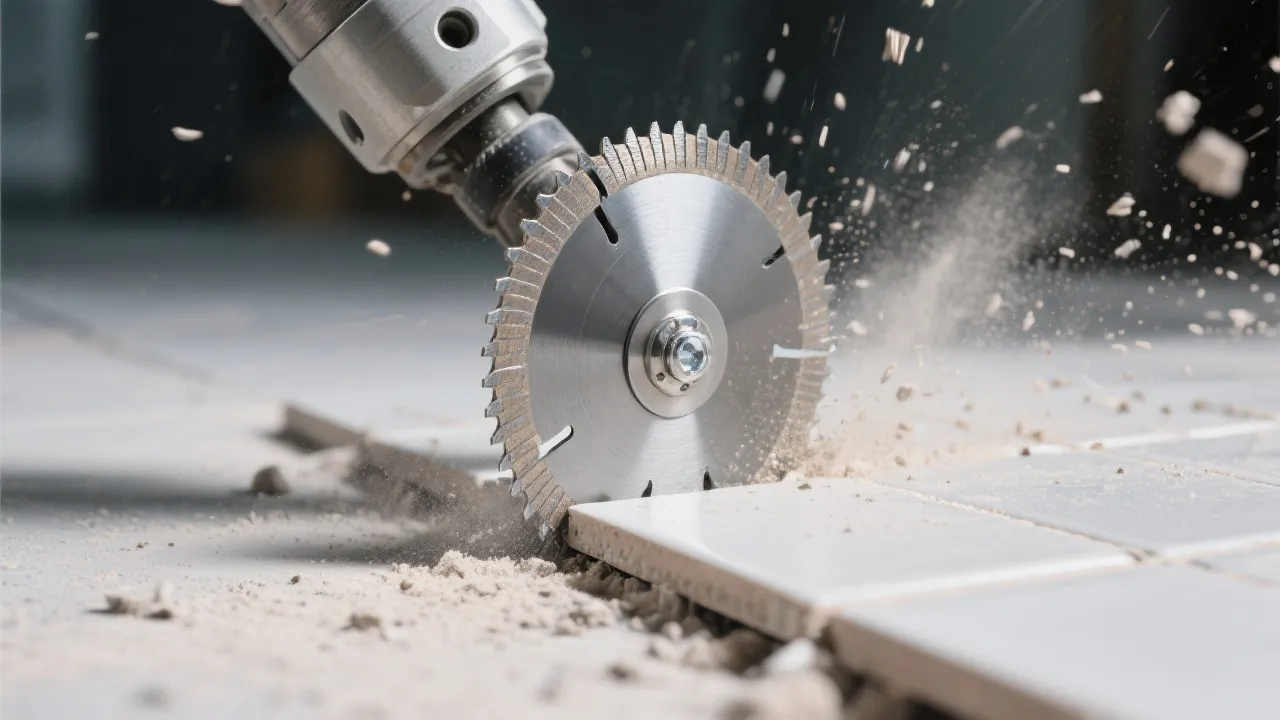
In today’s high-efficiency manufacturing environments, tool longevity isn’t just a convenience—it’s a competitive advantage. Brazed diamond saw blades have emerged as the preferred choice for industries cutting hard materials like cast iron, stainless steel, and stone, thanks to their proven ability to extend blade life by up to 40% compared to traditional methods (based on field tests from CNC machining centers in Germany and China).
Unlike sintered or electroplated alternatives, brazed blades use high-grade synthetic diamonds—typically 80–120 mesh size—with superior thermal stability. These grains are bonded using a silver-based alloy at temperatures between 750°C and 850°C, ensuring minimal grain loss during operation. According to Dr. Lin Wei, a materials engineer at Tsinghua University, “This process creates a stronger interface between diamond and matrix, reducing micro-fractures that lead to premature wear.”
Industry data shows these blades maintain sharpness for over 300 linear meters in gray cast iron before needing replacement—a 3x improvement over standard tungsten carbide-tipped blades.
The base body is made from ultra-thick high-manganese steel (≥12mm), which not only resists deformation under heavy load but also absorbs vibration better than thinner or lower-alloy steels. This design reduces heat buildup by up to 25%, directly contributing to longer service life and safer operations—especially critical in automated production lines where downtime costs exceed $1,000/hour.
A case study from a German automotive parts manufacturer revealed that switching to brazed diamond blades cut their monthly blade replacements from 45 units to just 18—resulting in an annual savings of €18,000 in procurement and labor costs alone.
These applications aren't theoretical—they’re validated across 30+ factories worldwide, including those in Turkey, India, and Mexico, where dust emissions dropped by 60% after switching to brazed blades due to reduced friction and more consistent cutting paths.
Pro Tip: For optimal performance, always match blade thickness and tooth count to your machine’s RPM range. Most manufacturers recommend 12–16 teeth per inch for medium-hard materials like ductile iron.
When you factor in fewer replacements, less operator fatigue, and improved product quality, the ROI for brazed diamond saw blades becomes undeniable. Companies adopting this technology report a 20–30% increase in daily throughput within the first quarter—without adding new equipment or staff.
If you're looking to reduce long-term operational costs while boosting precision and safety, it's time to explore how brazed diamond blades can transform your cutting workflow.
Discover our premium brazed diamond saw blades engineered for durability, cost-effectiveness, and unmatched performance.
Explore Our Brazed Diamond Blade Solutions

.png?x-oss-process=image/resize,h_1000,m_lfit/format,webp)
.png?x-oss-process=image/resize,h_1000,m_lfit/format,webp)