
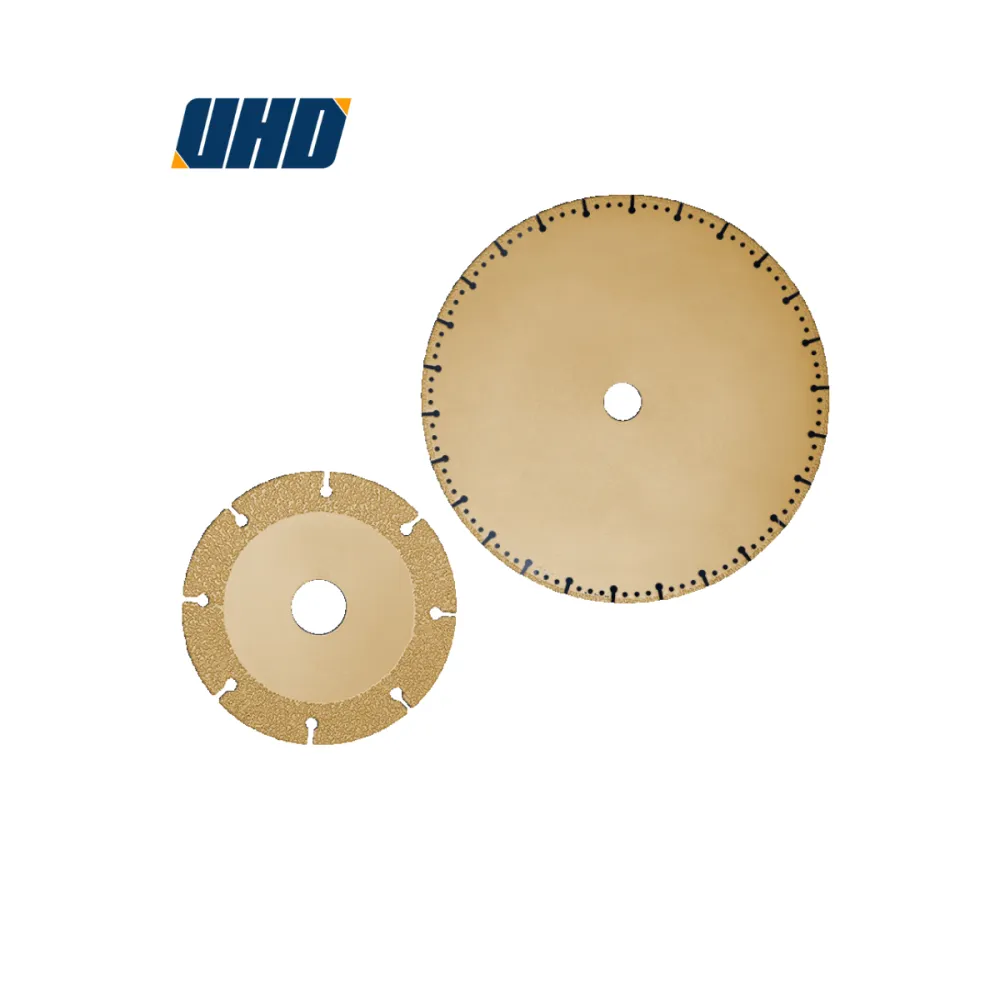
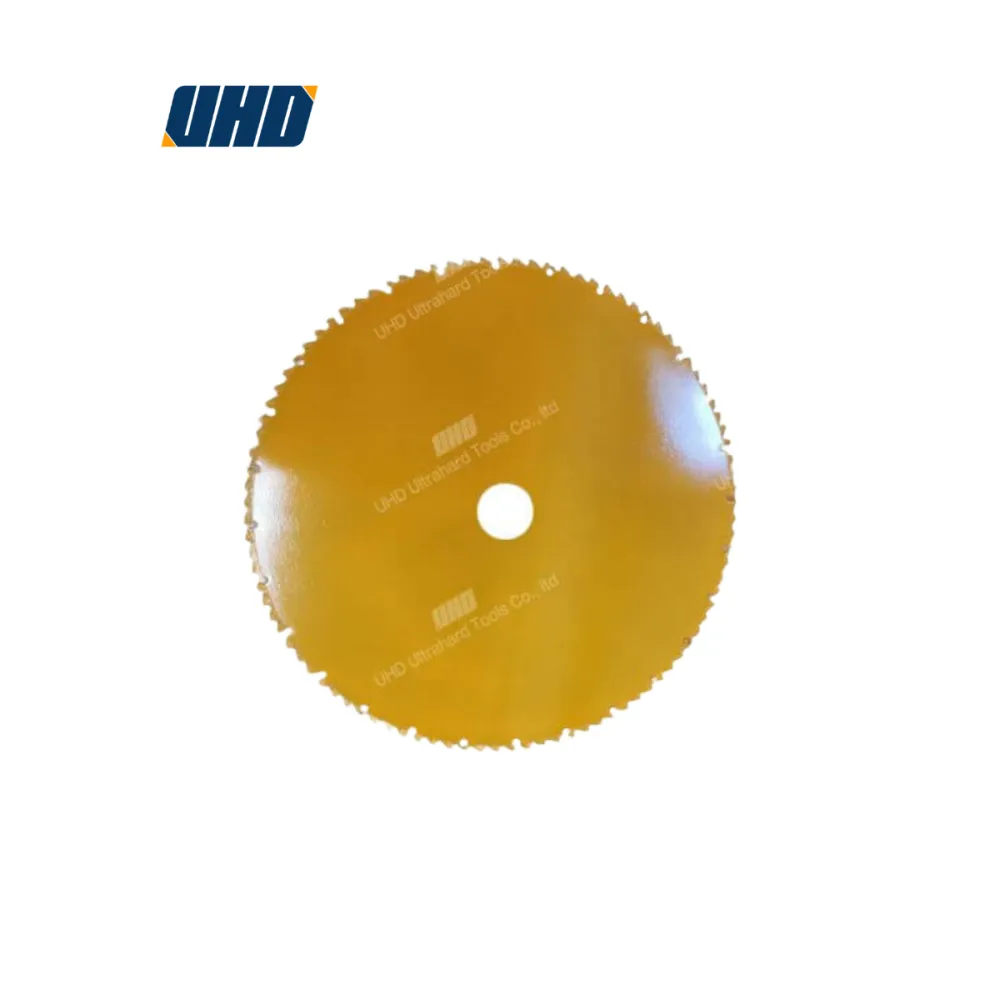
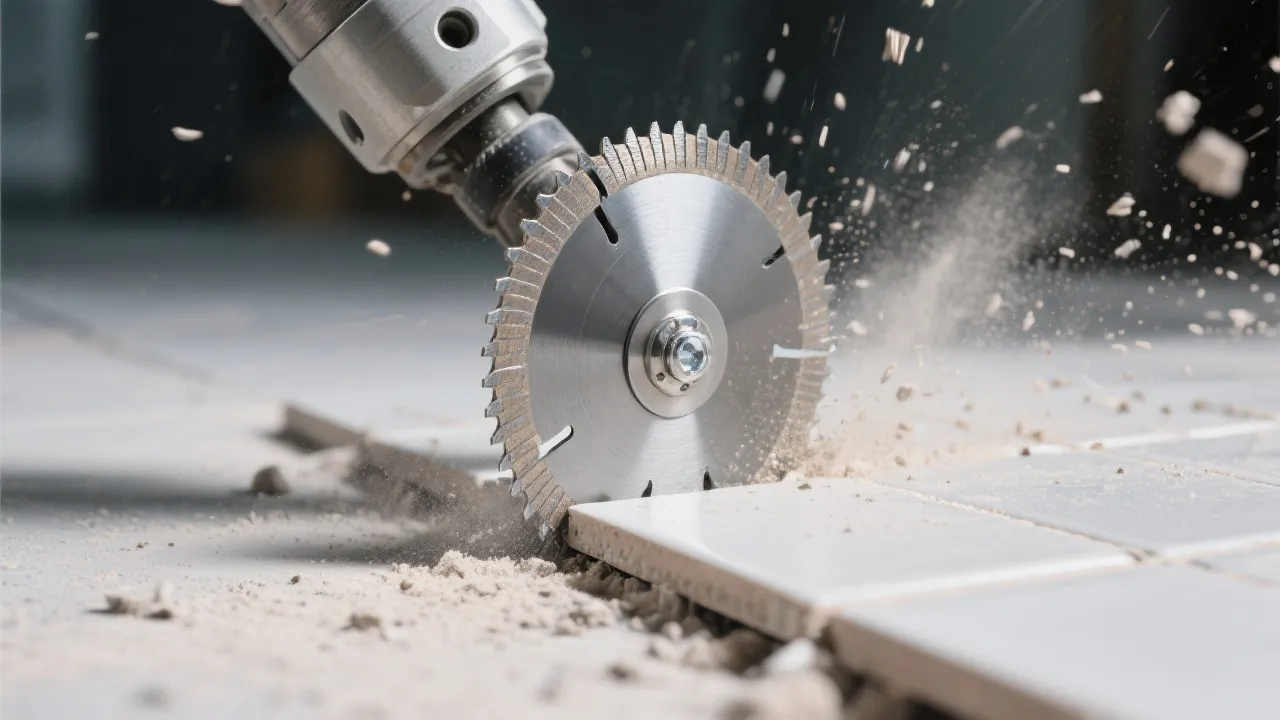
The brazed diamond saw blade represents a breakthrough in industrial cutting technology, engineered to deliver superior durability and precision across a broad spectrum of challenging materials including gray cast iron, ductile iron, stainless steel, and hard alloys. Leveraging premium-grade diamond particles coupled with a high-manganese steel ultra-thick backbone, this cutting tool offers unparalleled wear resistance and exceptional sharpness optimized for rugged manufacturing environments.
At the core of the brazed diamond saw blade’s performance is its meticulously selected diamond grit, characterized by an average particle size of 60/80 mesh, delivering a balance of aggressive cutting ability and long service life. The bonding technology securely brazes the diamond grit onto a high-manganese steel substrate, which measures between 12-16 mm in thickness—significantly thicker than standard blades—ensuring exceptional structural integrity and vibration dampening, which translates into precise, stable cuts with minimal blade deflection.
Designed for versatility, the brazed diamond blade excels in cutting demands from automotive manufacturing, aerospace components, to heavy machinery production. Its ability to maintain high cutting speed and accuracy on complex alloys and hard-to-machine materials meets the evolving needs of industries that demand tight tolerances and reliability. It is particularly effective in processing cast irons and stainless steels which typically pose challenges for traditional cutting tools.
Comparative testing reveals that brazed diamond saw blades outperform conventional steel and carbide-tipped blades by extending tool life up to 3 times and improving cutting speed by approximately 35%, according to industry benchmarks from recent evaluations. This translates directly to significant downtime reduction and higher throughput on production lines.

Operational data collected over a 12-month period demonstrates that manufacturers adopting brazed diamond saw blades experience up to a 25% reduction in total tooling expenses, factoring in longer blade replacement intervals and improved cut quality. The higher initial investment is quickly offset by decreased labor costs, fewer blade changes, and lower scrap rates stemming from precise dimension control.
Beyond efficiency, these blades contribute to safer, cleaner workplaces. Their cutting mechanism produces up to 40% less dust particulate compared to abrasive alternatives, significantly improving air quality and reducing the necessity for heavy respiratory protective equipment. Moreover, the decrease in manual adjustments lowers worker fatigue and potential injury risks.
Understanding the uniqueness of each manufacturing requirement, suppliers offer comprehensive customization services. Options range from varying diamond grit sizes, blade diameters spanning 200 mm to 600 mm, to base material hardening levels, enabling customers to optimize blades precisely for their specific cutting environments. This flexibility empowers industries to enhance production without compromise.
A prominent OEM in the automotive sector reported a 30% increase in engine block production efficiency by switching to customized brazed diamond blades, noting improved cut precision and extended blade lifespan. Another aerospace components manufacturer achieved substantial reductions in material waste and labor overhead, validating the blades’ value across demanding applications.
Continual R&D efforts focus on enhancing diamond purity and exploring nanostructured coating technologies to further elevate cutting performance. Coupled with digital integration for real-time blade condition monitoring, brazed diamond saw blades are set to redefine industrial cutting standards, aligning with global sustainability and efficiency goals.
.png?x-oss-process=image/resize,h_1000,m_lfit/format,webp)

.png?x-oss-process=image/resize,h_1000,m_lfit/format,webp)

 <#else>


