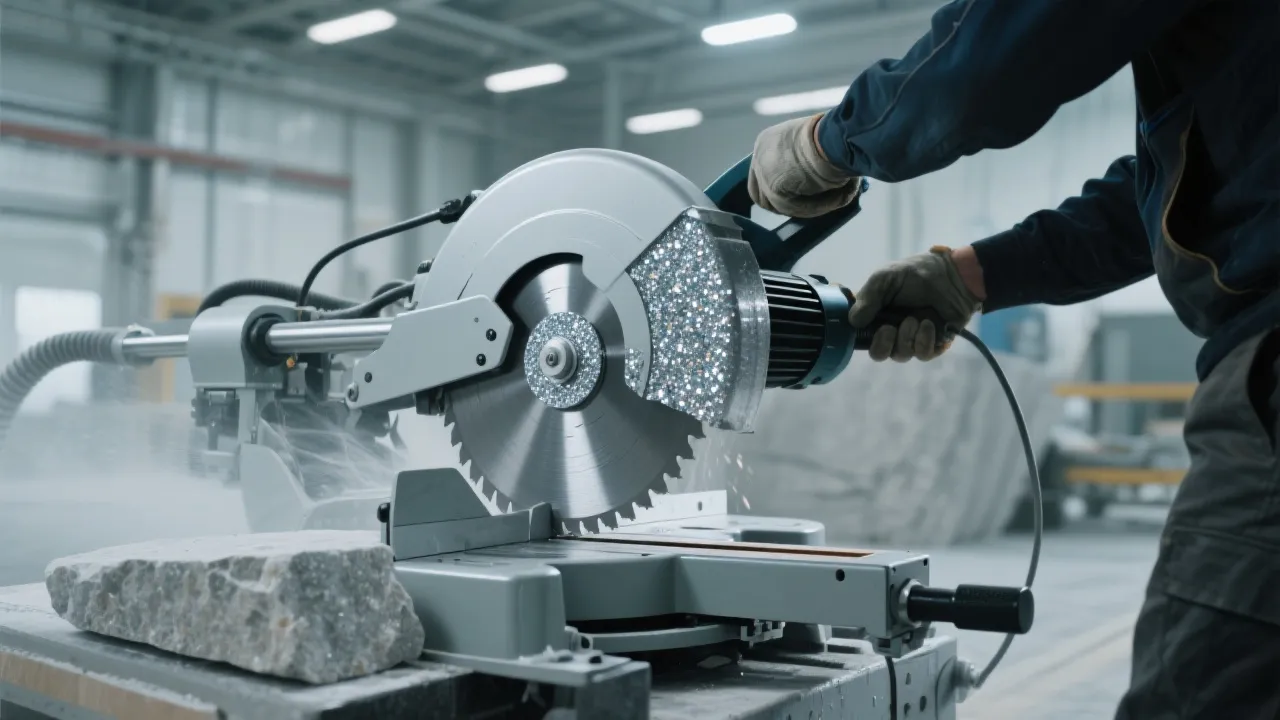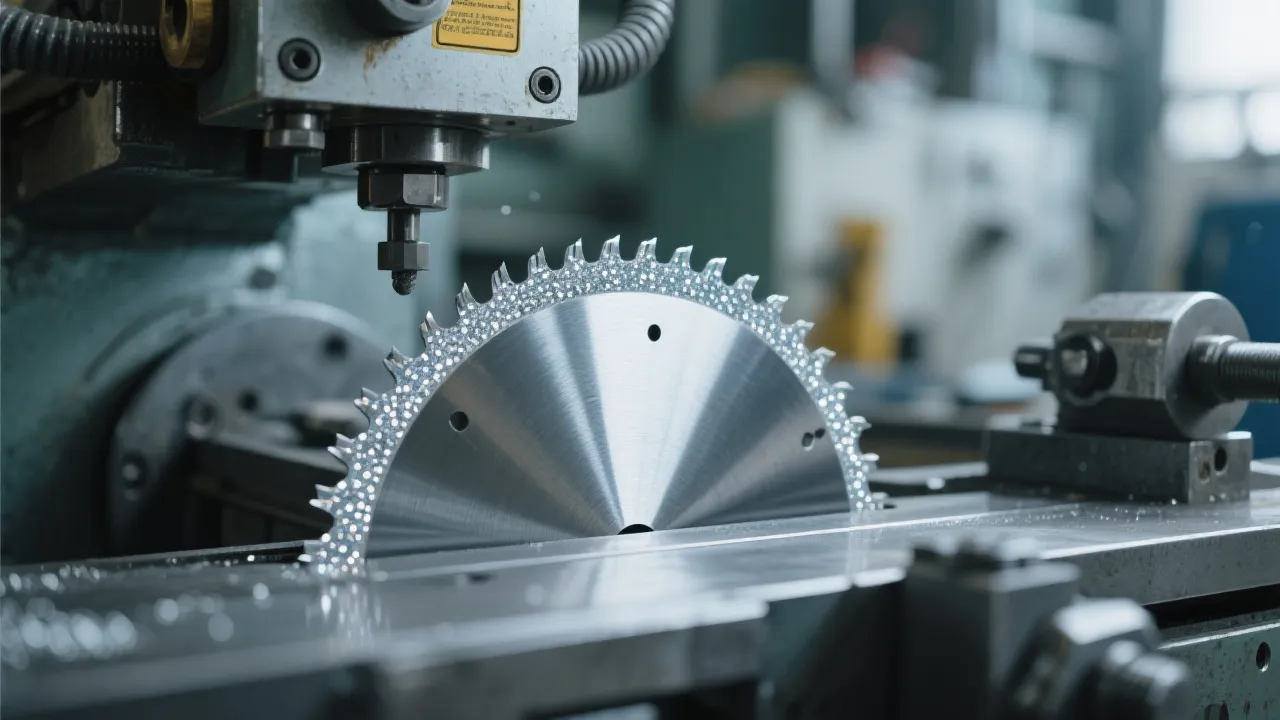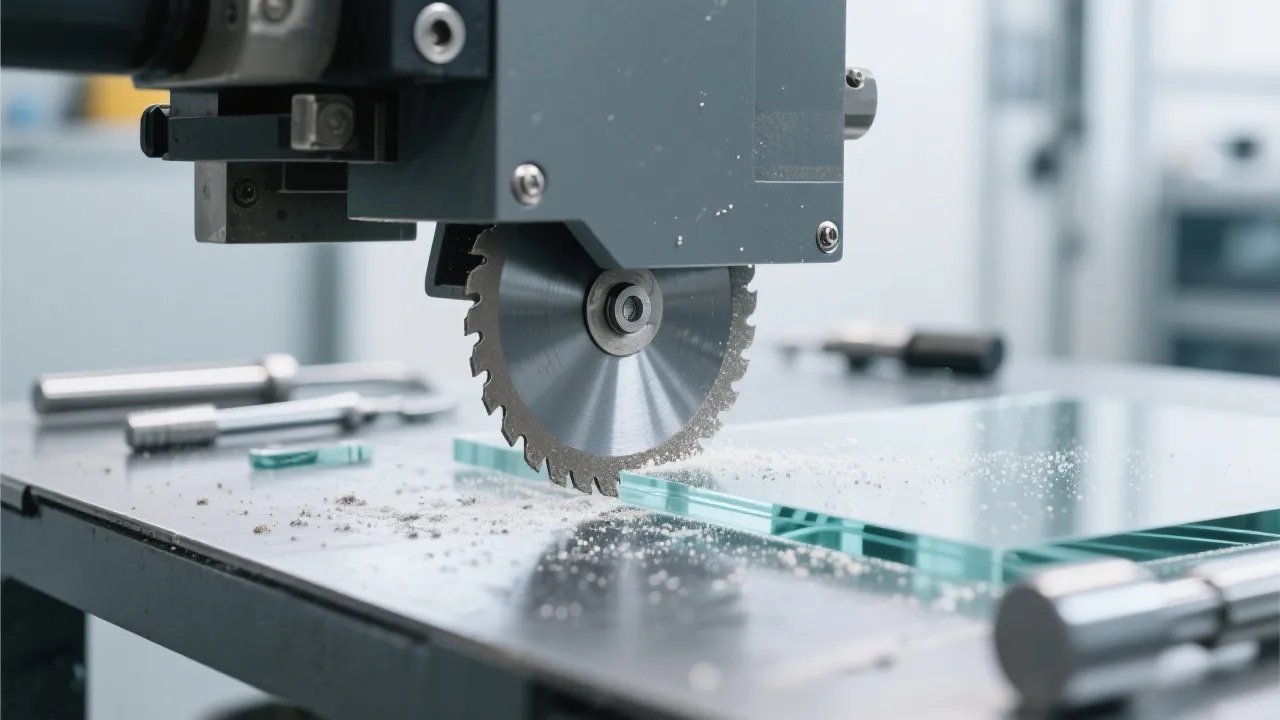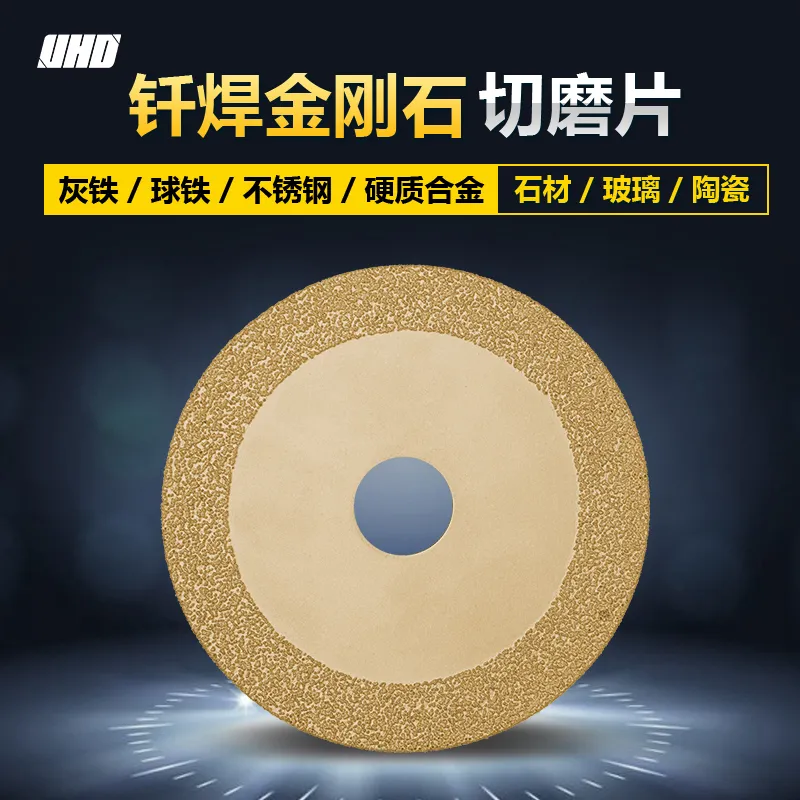
In industrial cutting, “diamond” is not a single performance promise—it’s a system. Grain type and size, bond chemistry, and joining process determine cutting forces, heat flow, wear mode, and ultimately whether a tool keeps its edge or fails early. This article explains the technical essence behind UHD-grade diamond cutting tools, with practical selection logic for metal and stone, plus targeted fixes for common shop-floor issues like chipping, overheating, and out-of-spec surface finish.
The performance gap between average and high-performance diamond tools starts with the physics of superhard materials. Diamond’s extreme hardness improves abrasion resistance, while its high thermal conductivity helps pull heat away from the cutting zone—critical when cutting stainless steel or dense stone where frictional heat spikes.
Single-crystal diamond typically offers sharp, well-defined cutting points and stable micro-geometry, supporting efficient penetration and lower initial cutting forces. However, in high-impact or interrupted cutting, a single large crystal can be more prone to catastrophic fracture once a crack propagates.
Polycrystalline diamond (PCD) is a sintered structure of many microcrystals. It tends to distribute stress better and can offer more predictable wear under vibration, making it attractive where impact resistance is critical. The tradeoff is that “sharpness feel” and chip formation can differ, especially when the application demands aggressive bite.
Buyer-oriented insight: For many production lines, the best result is not the “hardest diamond,” but the most stable wear mode. A slightly less aggressive structure that resists micro-chipping can reduce tool changes and stabilize quality metrics (kerf, finish, dimensional drift).
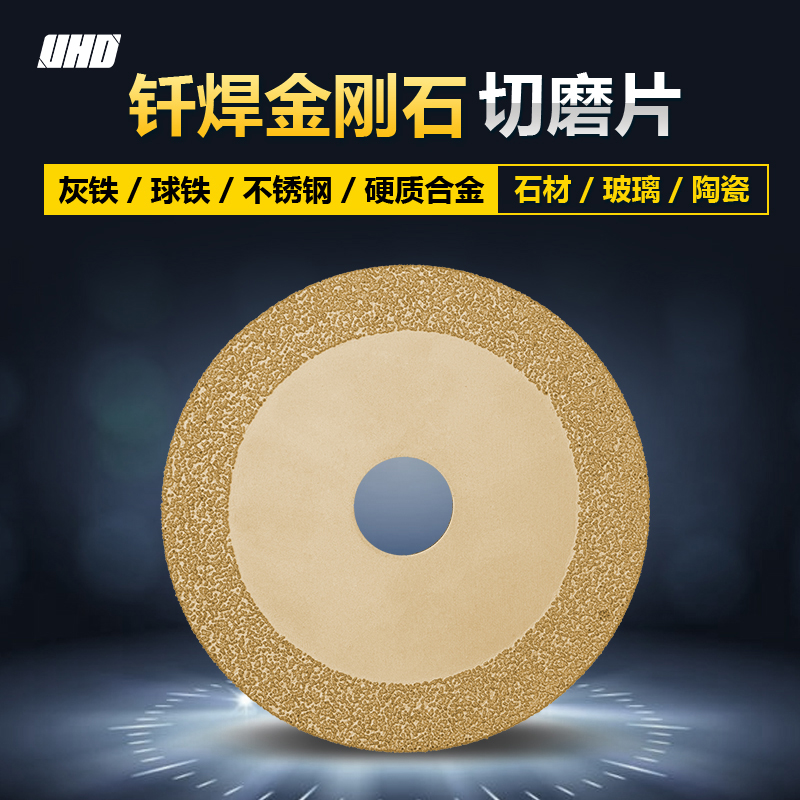
Diamond grain size directly controls the number of cutting points per unit area and the depth-of-cut per grain. In practice, it influences cutting force, temperature generation, and surface quality.
A useful rule of thumb in decision-stage selection: if the process is heat-limited (blueing, glazing, burning marks), shifting from overly fine to a slightly coarser grain can reduce friction and stabilize temperature—provided the bond and braze can hold the grains under load.
The bond is not just a glue—it sets how the tool wears. A well-matched bond releases dull grains at the right moment and exposes fresh cutting points. A mismatched bond causes either premature shedding (short life) or glazing/rubbing (overheat and poor efficiency).
For many cutting tools used on metal and stone, two architectures dominate:
Reference ranges reflect common production scenarios. Final parameters depend on machine rigidity, coolant delivery, tool diameter, and cut type (dry/wet, continuous/interrupted).
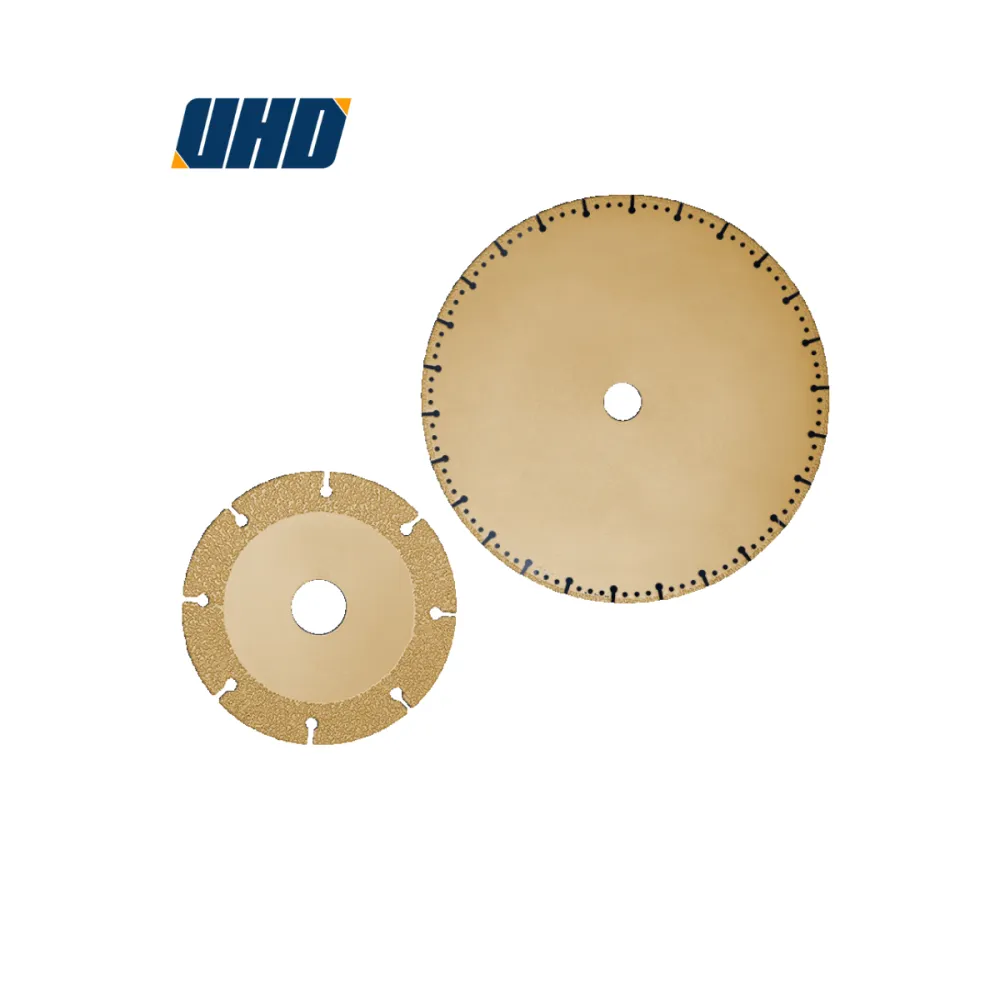
Vacuum brazing is often selected for high-performance diamond cutting tools because it creates a clean, controlled joining environment. Compared to less controlled joining methods, vacuum brazing reduces oxidation and improves wetting behavior of the brazing alloy, resulting in a more reliable grain anchoring.
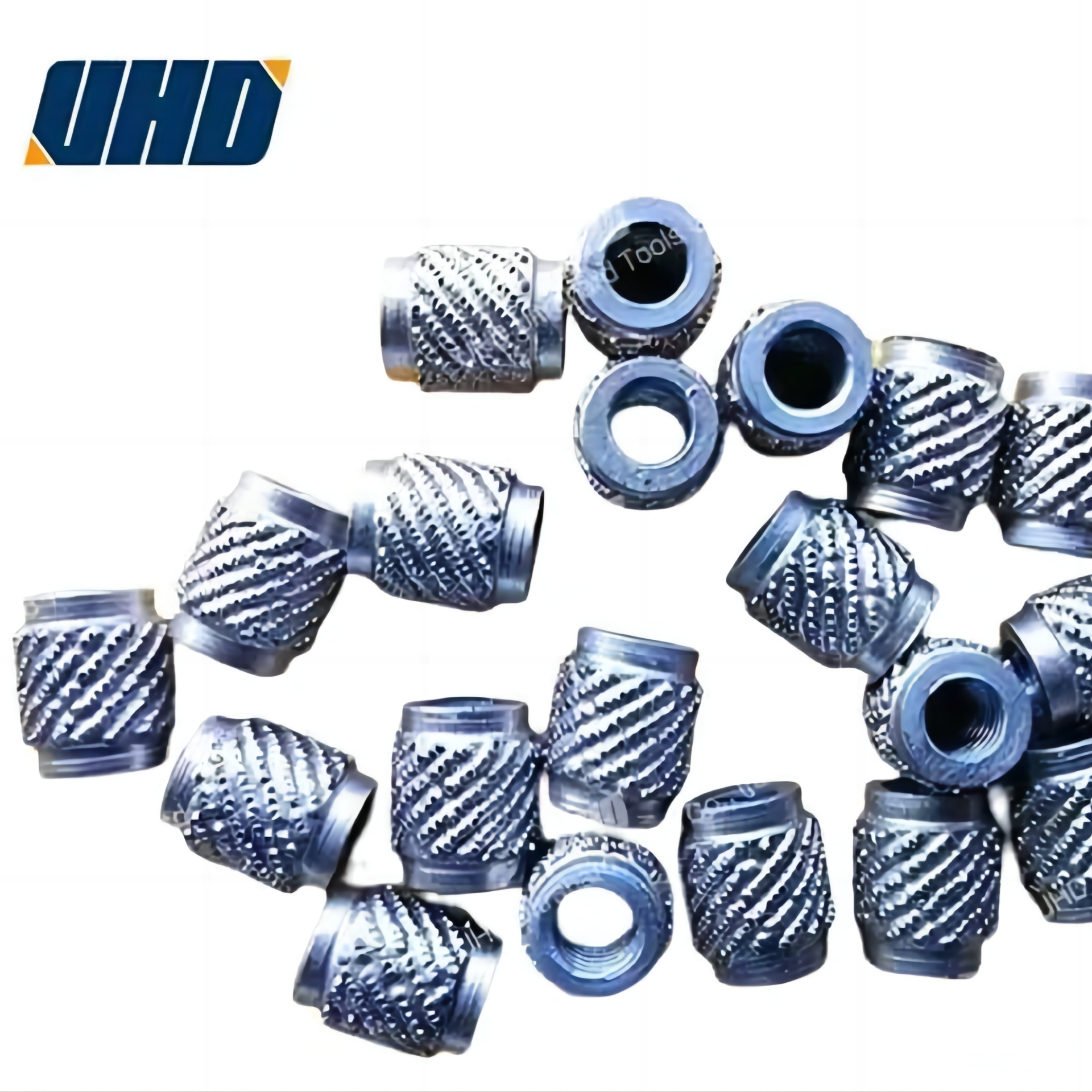
Decision-stage procurement benefits from a simple reality check: the same tool geometry can behave differently because the dominant wear mechanism changes by material. Metals often punish tools with heat and adhesion; stone punishes tools with abrasion and impact.
Stainless steel tends to generate high frictional heat and can promote smearing if chip evacuation is poor. For stable performance, prioritize a grain size that cuts rather than rubs (commonly 50/60–60/80), and ensure coolant reaches the contact zone. In many lines, a 10–20% feed reduction coupled with better coolant delivery yields more life than pushing RPM.
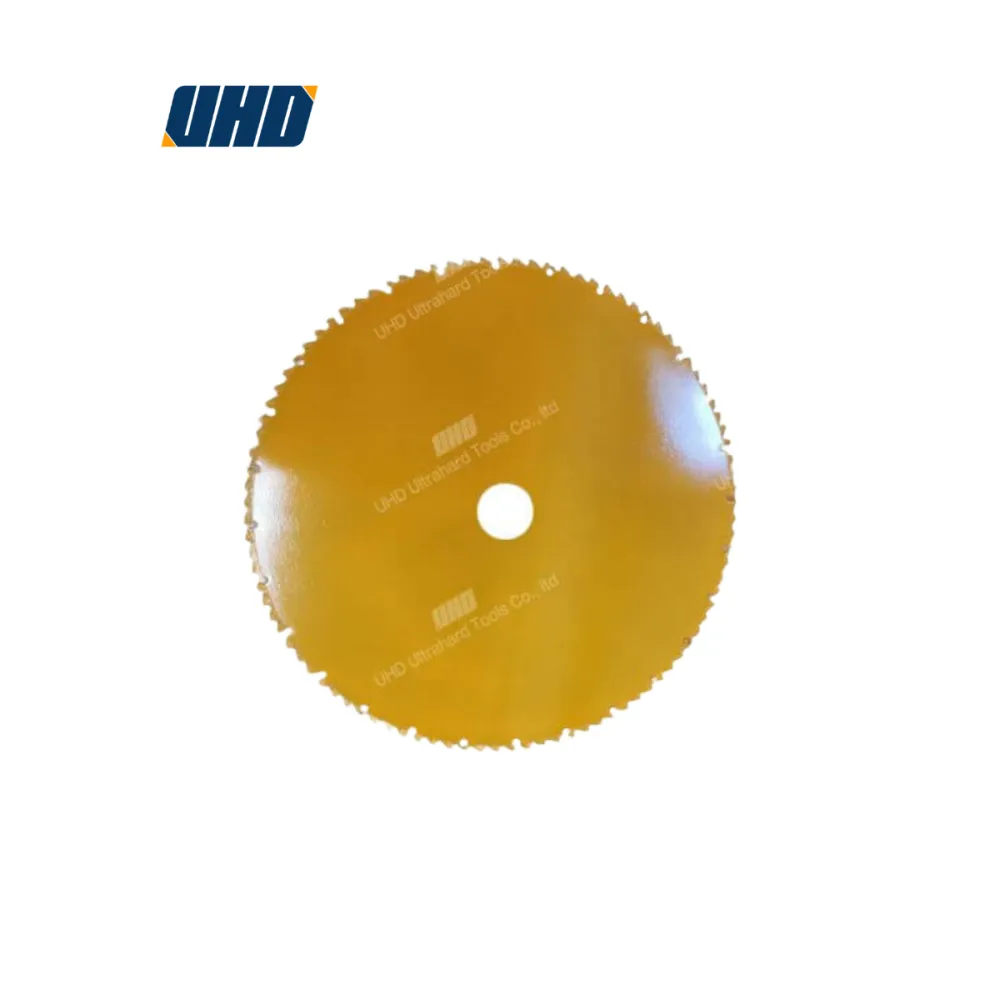
Cast iron’s graphite structure can be tool-friendly, but the abrasive nature and dust can accelerate wear. Tools with robust grain anchoring and stable exposure often deliver predictable life. If wear is too fast, consider a slightly tougher diamond structure or bond design; if glazing appears, the tool may be too “closed” for the load.
Granite often requires coarser grains (30/40–40/50) to maintain penetration and avoid excessive heat buildup from rubbing. Marble is typically more sensitive to edge chipping and finish requirements; finer grains (60/80–80/100) can reduce micro-chipping and improve surface quality when machine stability is good.
.png)
Edge chipping typically indicates excessive impact per grain or unstable engagement. Frequent root causes include misalignment, aggressive entry/exit, insufficient rigidity, or a grain/braze combination that is too brittle for the application.
Overheating is usually a sign of rubbing rather than cutting. This can happen when grain size is too fine for the load, the tool face becomes glazed, or coolant fails to reach the cut.
Roughness issues often come from vibration, inconsistent grain engagement, or an overly aggressive grain for the finish target. In many production lines, addressing stiffness and consistency yields better results than simply going “finer.”
High-performance outcomes rarely come from generic specs alone. UHD-style customization focuses on aligning diamond type, grain size distribution, brazing alloy, and tool geometry with real constraints: spindle power, coolant method (wet/dry), cut continuity, and target KPIs (throughput vs. finish vs. tool life).
For procurement and engineering teams, the most actionable way to specify requirements is to provide: workpiece material and hardness range, machine model and RPM range, cut depth and feed rate, coolant type, and the dominant failure mode observed. From there, a matching plan can be built to reduce variability and stabilize cost per cut.
Choosing the right diamond grain, bond system, and vacuum-brazed structure is the difference between “it cuts” and “it performs.” For demanding metal and stone applications, choose UHD high-performance diamond cutting tools to improve cutting stability, extend service life, and keep your output consistent under harsh conditions.
Request a UHD Tool Matching Plan (Specs Review + Recommendation)Typical response workflow: spec intake → application assessment → recommended grain/braze/geometry → pilot run support.
.png?x-oss-process=image/resize,h_1000,m_lfit/format,webp)
.png?x-oss-process=image/resize,h_1000,m_lfit/format,webp)