In the industrial manufacturing sector, the issue of cutting dust has long been a significant concern. High levels of dust not only degrade the air quality in workshops but also pose threats to the health of workers. This is where environmentally-friendly diamond saw blades come into play. These advanced saw blades are designed to minimize dust generation during the cutting process, making them a crucial tool for achieving green production and protecting workers' health.
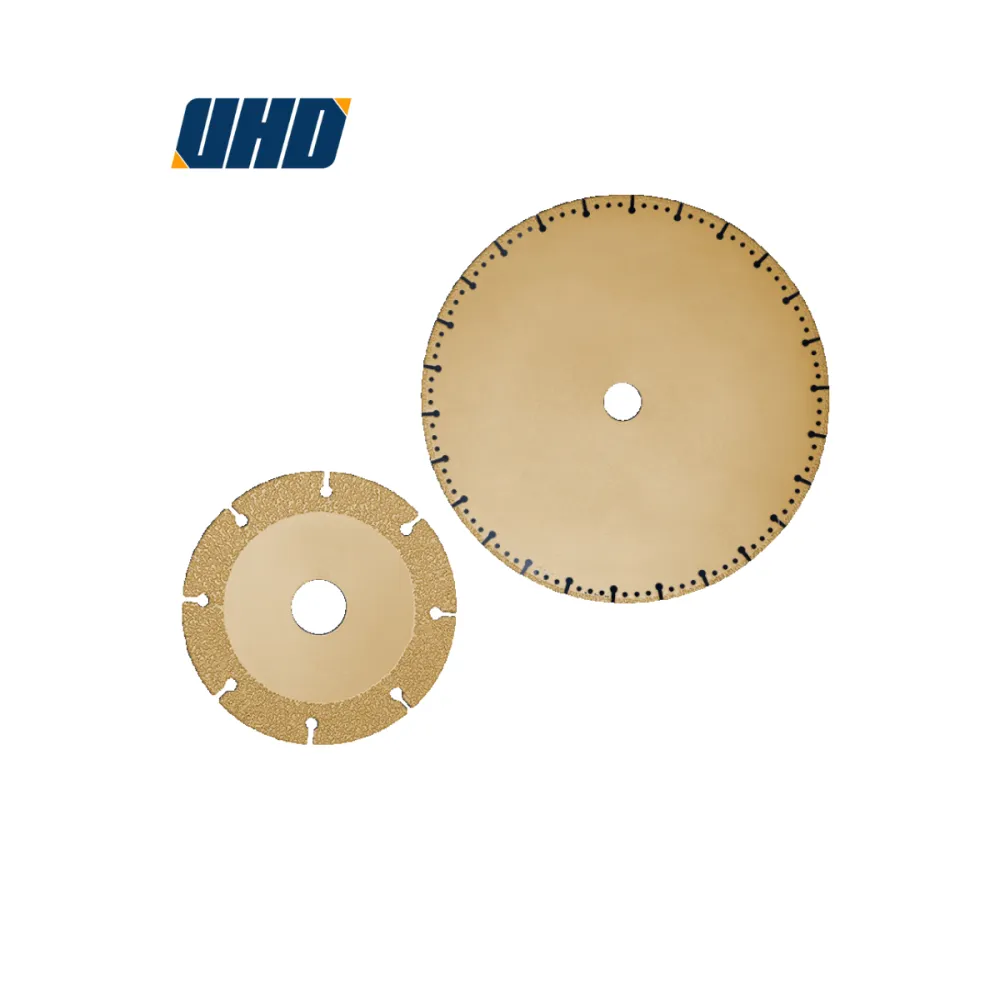
The low-dust cutting performance of high-end environmentally-friendly diamond saw blades is attributed to several key design features. Firstly, the precision tooth profile design plays a vital role. The unique tooth shape is engineered to cut through materials more smoothly, reducing the amount of material that is shattered into dust. According to industry research, a well-designed tooth profile can reduce dust generation by up to 30% compared to traditional saw blades.
Secondly, the high-density arrangement of diamond particles is another important factor. High-purity diamond particles with a high density can cut materials more efficiently, resulting in less dust. The high hardness of diamond allows for a cleaner cut, minimizing the friction and heat that can cause materials to break into fine dust. Additionally, the optimized structure of the chip flutes helps to expel the chips and dust generated during cutting. This prevents the dust from accumulating around the cutting area, further reducing the amount of dust in the air.
There are two main cutting conditions: dry cutting and wet cutting. Each has its own characteristics in terms of dust control.
| Cutting Condition | Dust Control Effect | Advantages | Disadvantages |
|---|---|---|---|
| Dry Cutting | Generates more dust, but with proper ventilation and dust collection systems, it can still meet certain environmental requirements. Dust generation can be reduced by about 20% - 30% with the use of environmentally-friendly saw blades. | No need for water, suitable for some materials that are sensitive to moisture, and the cutting speed is relatively fast. | Requires better ventilation and dust collection equipment, and the saw blade may wear out faster due to the lack of cooling. |
| Wet Cutting | Significantly reduces dust generation, with dust reduction rates of up to 80% - 90%. It can effectively control the spread of dust in the workshop. | Good dust control effect, can cool the saw blade, and extend the service life of the saw blade. | Requires a water supply system, and there may be problems with wastewater treatment. |
To ensure the long-term performance of the saw blade, regular maintenance is essential. Firstly, the chip flutes should be cleaned regularly. Accumulated chips in the flutes can affect the chip removal efficiency and increase dust generation. It is recommended to clean the flutes after every 8 - 10 hours of use.
Secondly, proper cooling methods should be selected according to the cutting conditions. In dry cutting, using air cooling or adding a small amount of lubricant can help reduce heat and wear. In wet cutting, ensure a stable water supply and use clean water to prevent blockages in the cooling system.
In conclusion, environmentally-friendly saw blades offer a practical solution for industrial manufacturing enterprises to reduce cutting dust and improve workshop air quality. By understanding the technical principles, choosing the appropriate cutting conditions, and following the maintenance suggestions, enterprises can achieve more environmentally-friendly and efficient production. If you want to learn more about efficient and environmentally-friendly cutting solutions, click here.
.png?x-oss-process=image/resize,h_1000,m_lfit/format,webp)
.png?x-oss-process=image/resize,h_1000,m_lfit/format,webp)