
Traditional resin saw blades have long been a source of headache for industrial users. They are prone to rapid wear and tear, which means frequent replacements. For example, in a medium - sized industrial cutting operation, a resin saw blade might need to be replaced every 20 - 30 cutting jobs. This constant replacement not only incurs significant costs but also leads to downtime, reducing overall operational efficiency. The cost of replacing these saw blades can account for up to 15% of the total cutting - related expenses in some industries, putting a heavy financial burden on businesses.
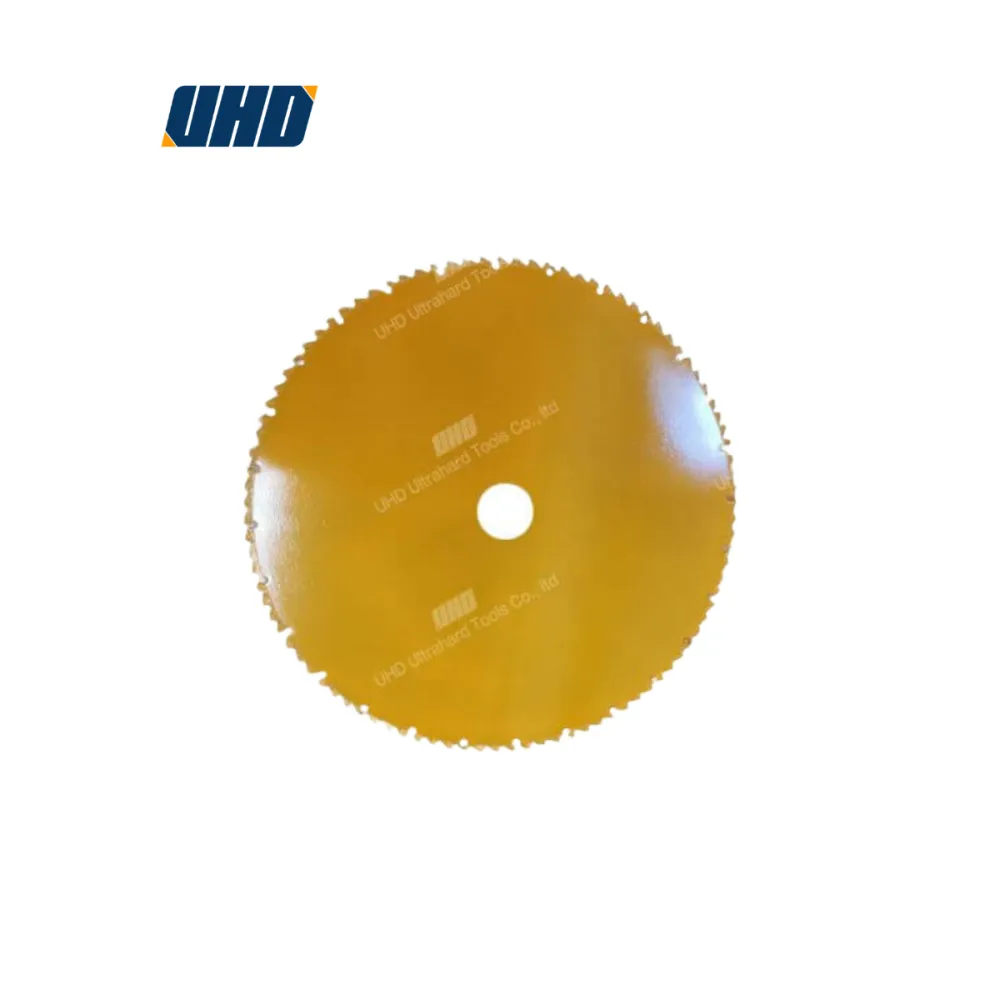
Brazed diamond saw blades offer a revolutionary solution to the above - mentioned problems. These saw blades are made of high - wear - resistant diamonds bonded to a high - manganese steel substrate. The high - quality diamond particles on the cutting edge can withstand extreme pressure and friction, while the manganese steel substrate provides excellent toughness and stability. Compared with traditional resin saw blades, the lifespan of brazed diamond saw blades can be extended by up to 3 - 5 times. For instance, a 400 - model brazed diamond saw blade can perform 80 - 150 cutting jobs on complex workpieces such as gray cast iron, stainless steel, and stone, significantly reducing the frequency of replacement.
The cutting parameters, such as feed rate and rotational speed, play a crucial role in determining the lifespan of brazed diamond saw blades. If the feed rate is too high, the saw blade will be subjected to excessive pressure, leading to premature wear of the diamond particles. On the other hand, if the rotational speed is too low, the cutting efficiency will be reduced, and the saw blade may also be damaged due to uneven stress. Generally, for cutting gray cast iron, a feed rate of 10 - 15 mm/min and a rotational speed of 2000 - 2500 rpm are recommended. For stainless steel, a lower feed rate of 5 - 10 mm/min and a higher rotational speed of 2500 - 3000 rpm are more appropriate.
Proper cooling is essential for maintaining the performance and lifespan of brazed diamond saw blades. Using a suitable coolant can effectively reduce the temperature generated during the cutting process, preventing the diamond particles from being damaged by high - temperature oxidation. Water - based coolants are commonly used for cutting gray cast iron and stone, while oil - based coolants are more suitable for stainless steel cutting. By using the right cooling method, the lifespan of the saw blade can be increased by about 20 - 30%.
Daily maintenance is equally important as the key processes. Regular cleaning of the saw blade can remove debris and chips, preventing them from scratching the cutting edge. After each use, the saw blade should be cleaned with a soft brush and a mild cleaning agent. When storing the saw blade, it should be placed in a dry and cool place, away from moisture and corrosive substances. Additionally, regular inspection of the blade edge can detect any signs of wear or damage early, allowing for timely repair or replacement. These simple maintenance steps can significantly extend the lifespan of the saw blade.
In a real - world scenario, a stone - cutting factory switched from traditional resin saw blades to brazed diamond saw blades. After implementing the key processes and maintenance suggestions, they found that the replacement frequency of saw blades decreased from once every two weeks to once every two months. This not only saved them a large amount of money on saw blade purchases but also increased their daily cutting output by 20%. Similar results have been reported in the gray cast iron and stainless steel cutting industries, proving the effectiveness of these methods.
Are you tired of the high cost and inefficiency caused by short - lived saw blades? Discover the power of brazed diamond saw blades and transform your cutting operations. Click here to learn more
.png?x-oss-process=image/resize,h_1000,m_lfit/format,webp)

.png?x-oss-process=image/resize,h_1000,m_lfit/format,webp)


