
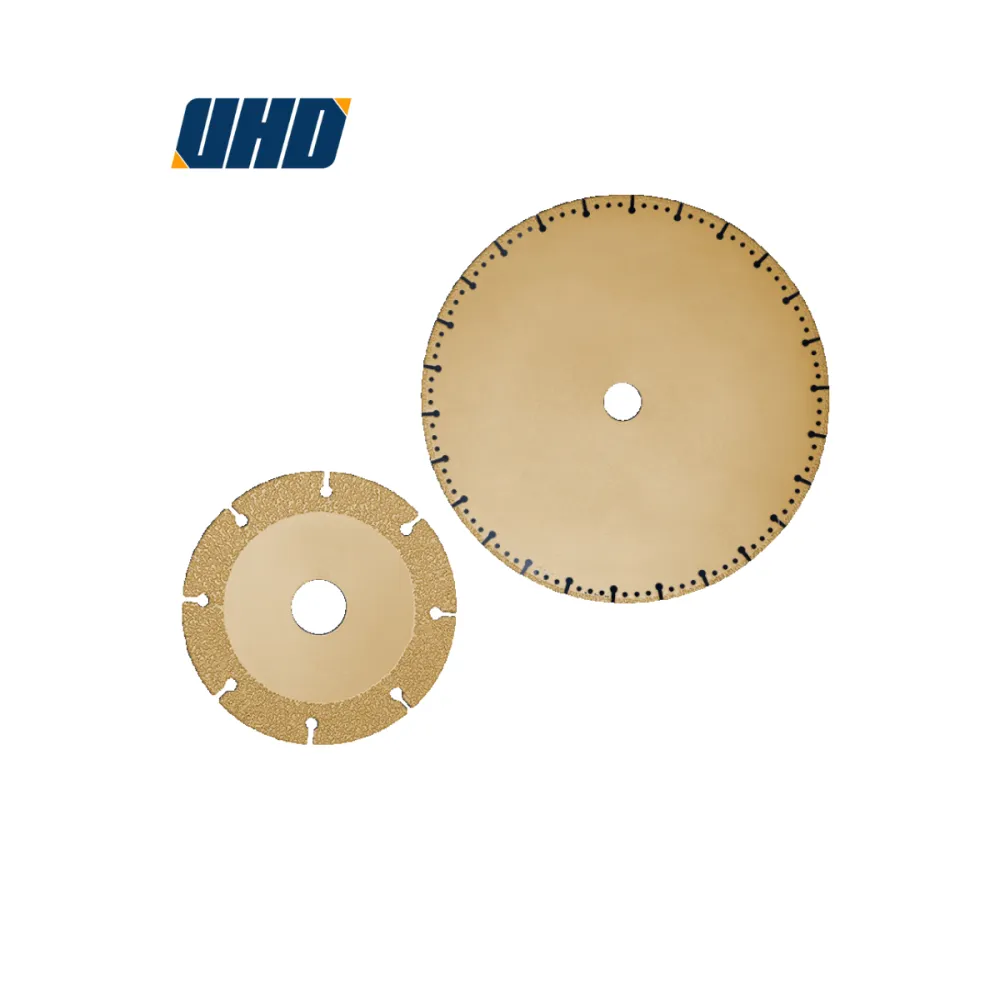
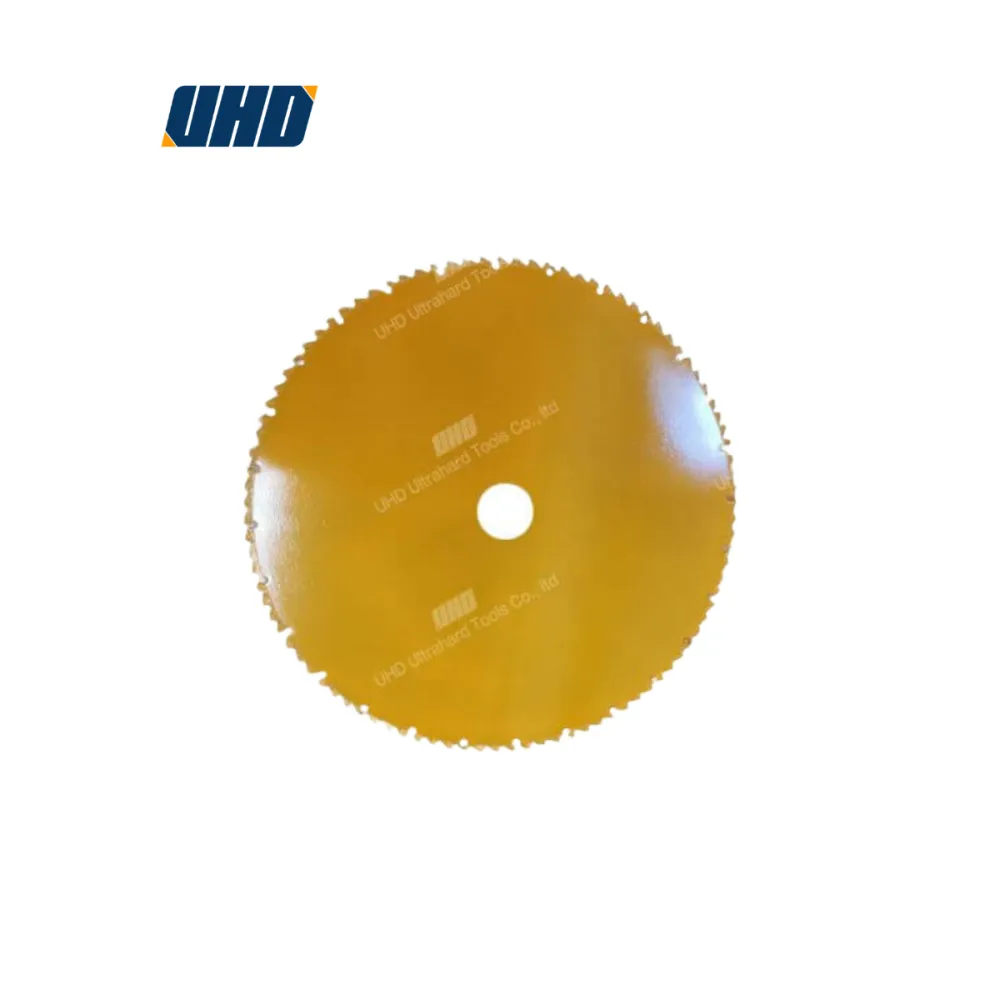
Brazed diamond saw blades are engineered with advanced diamond particles and a high - manganese steel matrix. The high - quality diamond particles are carefully selected for their hardness and sharpness. They are evenly distributed on the saw blade, ensuring consistent cutting performance. The high - manganese steel matrix provides a strong and stable base for the diamond particles, enhancing the overall durability of the saw blade.
Wear resistance is a crucial factor in the performance of a saw blade. A brazed diamond saw blade can withstand up to 50% more wear compared to traditional saw blades, according to industry data. This is due to the strong bond between the diamond particles and the matrix, which prevents the diamonds from falling off during the cutting process. The sharpness of the diamond particles allows for efficient and clean cuts, reducing the need for multiple passes. Moreover, the stability of the saw blade design ensures that it maintains a straight cutting path, improving the accuracy of the cuts.
When it comes to cutting metal materials such as gray cast iron, ductile cast iron, and stainless steel, brazed diamond saw blades shine. Gray cast iron has a relatively soft structure but contains graphite flakes, which can cause wear on traditional saw blades. A brazed diamond saw blade can cut through gray cast iron with ease, achieving a smooth cut surface. Ductile cast iron, on the other hand, is more ductile and has a higher strength. The high - wear resistance of the brazed diamond saw blade makes it suitable for cutting this tough material. Stainless steel is known for its corrosion resistance and hardness. The sharpness of the diamond particles on the saw blade can quickly penetrate the stainless steel surface, improving the cutting efficiency.
For non - metal complex workpieces like stone, glass, and ceramics, precision cutting is essential. Brazed diamond saw blades can provide the required precision. Stone materials vary in hardness and composition. A brazed diamond saw blade can be adjusted to different cutting parameters to handle different types of stone, from soft limestone to hard granite. Glass and ceramics are brittle materials, and any uneven cutting force can cause cracks. The stable design of the brazed diamond saw blade ensures a uniform cutting force, reducing the risk of breakage.
Proper adjustment of cutting parameters such as speed, pressure, and cooling is vital. The cutting speed should be adjusted according to the material being cut. For example, when cutting soft materials, a higher speed can be used, while for hard materials, a lower speed is recommended to prevent excessive wear on the saw blade. The pressure applied during cutting should be moderate. Too much pressure can cause the saw blade to overheat and wear out quickly, while too little pressure may result in inefficient cutting. Cooling is also important. Using a coolant can reduce the temperature of the saw blade, prolonging its service life and improving cutting quality.
During installation, the saw blade must be properly centered and tightened to prevent vibration. Vibration can not only affect the cutting accuracy but also accelerate the wear of the saw blade. Regular maintenance, such as cleaning the saw blade after each use, can remove debris and prevent clogging. Inspecting the saw blade for damage and replacing it when necessary is also crucial for maintaining cutting efficiency.
Optimizing the work environment can reduce dust and labor intensity. Using a dust collection system can effectively capture the dust generated during cutting, protecting the health of workers and reducing environmental pollution. Additionally, arranging the work area in an orderly manner can improve the efficiency of the cutting process.
There are two main types of wear on brazed diamond saw blades: abrasive wear and adhesive wear. Abrasive wear occurs when the diamond particles are worn down by the material being cut. To prevent this, using the correct cutting parameters and a suitable coolant can reduce the friction between the saw blade and the material. Adhesive wear happens when the material being cut sticks to the saw blade. Regular cleaning and using anti - adhesive coatings can help prevent this type of wear.
Determining a reasonable replacement cycle for the saw blade is important. A worn - out saw blade can not only reduce cutting efficiency but also increase the risk of accidents. By analyzing the cost of the saw blade and the savings in production time and labor, enterprises can find the optimal replacement cycle. For example, if a saw blade costs $100 and can save $200 in production costs over its service life, it is a cost - effective investment.
Many enterprises have reported significant improvements in production efficiency after using brazed diamond saw blades. For example, a metal processing factory reduced its cutting time by 30% and increased the service life of its saw blades by 40% after switching to brazed diamond saw blades. This not only reduced the cost of saw blade replacement but also increased the overall production output. In the future, with the continuous development of technology, brazed diamond saw blades are expected to have better performance and wider applications.
Upgrade Your Cutting Tools with Brazed Diamond Saw Blades Now!

.png?x-oss-process=image/resize,h_1000,m_lfit/format,webp)


