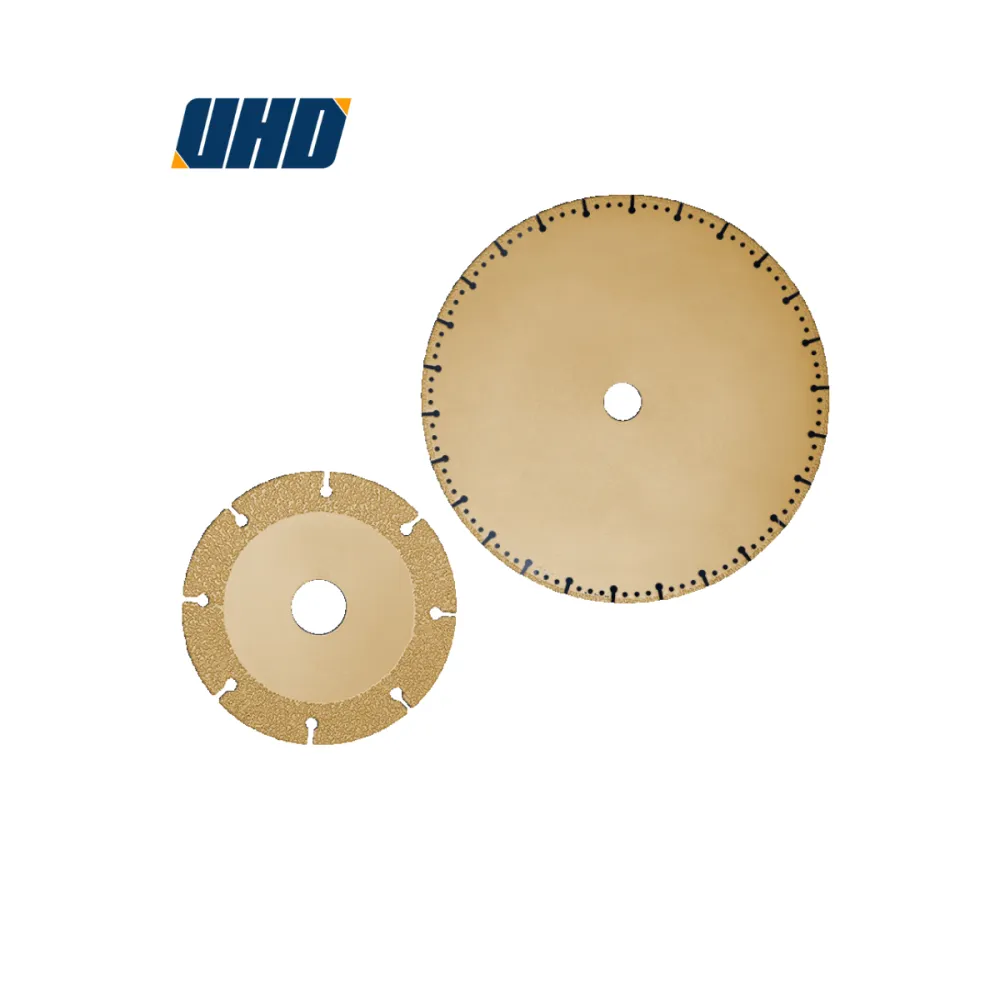
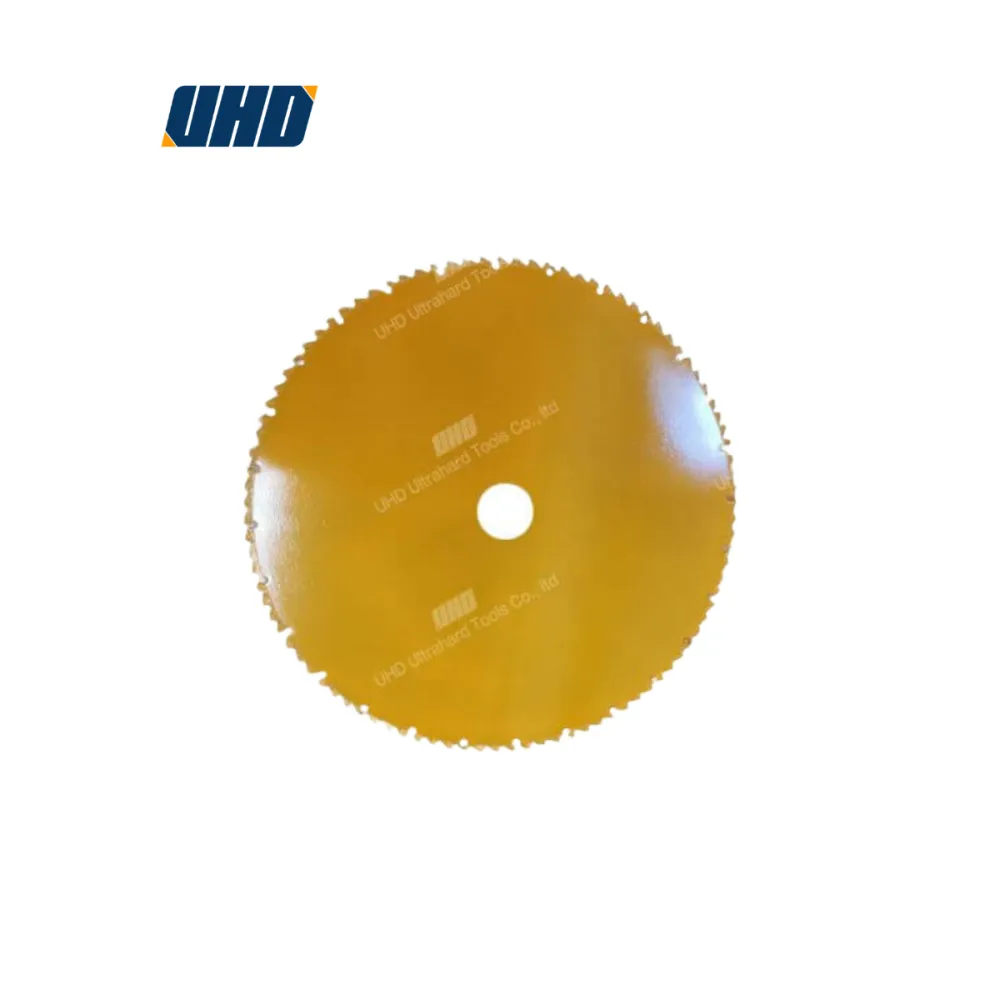
Brazed diamond saw blades are at the forefront of high - hardness material cutting technology. Their advanced diamond particles are carefully selected and precisely arranged on the saw blade. These diamond particles have a high hardness rating, typically around 9.5 on the Mohs scale, which is significantly higher than many other abrasive materials. This high hardness allows the saw blade to cut through hard materials effectively.
The ultra - thick matrix made of high - manganese steel is another key feature. The matrix thickness can reach up to 5mm, which is much thicker than ordinary saw blades. This design not only provides excellent support for the diamond particles but also enhances the overall stability of the saw blade during the cutting process. As a result, the saw blade can maintain a high level of cutting accuracy and has a longer service life. In some tests, the service life of brazed diamond saw blades is 3 - 5 times longer than that of traditional saw blades.
When cutting gray cast iron, the brazed diamond saw blade shows excellent performance. The advanced diamond particles can quickly break through the hard surface of the cast iron, and the thick matrix ensures a stable cutting process. In a customer case from a machinery manufacturing plant, the use of brazed diamond saw blades increased the cutting efficiency of gray cast iron by 40% compared to the previous saw blades. For ductile cast iron, the saw blade's high - precision cutting ability reduces the occurrence of cracks and burrs on the cutting surface, improving the overall quality of the workpiece. In the cutting of stainless steel, the saw blade's wear - resistance is particularly prominent. The diamond particles can withstand the high - temperature and high - pressure environment generated during the cutting process, ensuring a smooth cutting surface.
One of the significant advantages of brazed diamond saw blades is their ability to reduce dust emissions. In a construction project where high - hardness concrete was being cut, the use of these saw blades reduced dust emissions by up to 60% compared to traditional saw blades. This not only improves the air quality in the work area but also reduces the health risks for workers. Moreover, the stable cutting process of the saw blade enhances the safety of the operation. The reduced vibration and noise levels make the working environment more comfortable for workers.
The long service life of brazed diamond saw blades directly leads to a significant reduction in the replacement frequency. In a metal processing factory, the replacement frequency of traditional saw blades was once every 2 - 3 days, while the brazed diamond saw blades only needed to be replaced once every 10 - 15 days. This reduction in replacement frequency not only saves the cost of purchasing new saw blades but also reduces the downtime for saw blade replacement, thereby increasing the overall production efficiency and effectively controlling the operating costs.
For different workpiece materials, specific cutting parameters need to be adjusted. When cutting gray cast iron, a lower cutting speed (around 20 - 30 m/min) and a higher feed rate (around 0.2 - 0.3 mm/r) are recommended. For stainless steel, a higher cutting speed (around 40 - 50 m/min) and a lower feed rate (around 0.1 - 0.2 mm/r) can achieve better cutting results. By following these suggestions, users can further improve the cutting quality of high - hardness materials.
Ready to revolutionize your high - hardness material cutting process? Discover the power of our brazed diamond saw blades and take your cutting operations to the next level. Click here to learn more!

.png?x-oss-process=image/resize,h_1000,m_lfit/format,webp)
.png?x-oss-process=image/resize,h_1000,m_lfit/format,webp)