Brazed Diamond Saw Blade Complete Purchasing Guide: Optimize Cutting Performance Based on Materials, Working Conditions and Comprehensive Cost
07 10,2026
UHD Ultrahard Tools Co., Ltd
Industry Guide
This page from UHD Ultrahard Tools introduces a complete brazed diamond saw blade purchasing guide, covering performance indicators, material and working condition adaptation, comparison with resin saw blades, and total cost assessment for industrial cutting procurement.

For industrial procurement teams and end users engaged in cutting grey cast iron, ductile iron, stainless steel, cemented carbide, granite, glass and ceramic materials, selecting a qualified brazed diamond saw blade that matches your actual working conditions is critical to balancing cutting efficiency, operating cost and workplace safety. This complete purchasing guide from UHD Ultrahard Tools covers core performance metrics, material adaptation scenarios, comparison with traditional resin saw blades and full-lifecycle cost evaluation, helping you make data-driven decisions instead of only focusing on the unit price of the tool.
Core Performance Indicators of Qualified Brazed Diamond Saw Blades
When evaluating a brazed diamond saw blade, you should not only check the basic specification parameters, but also focus on the following practical performance indicators that directly affect your daily cutting operations:
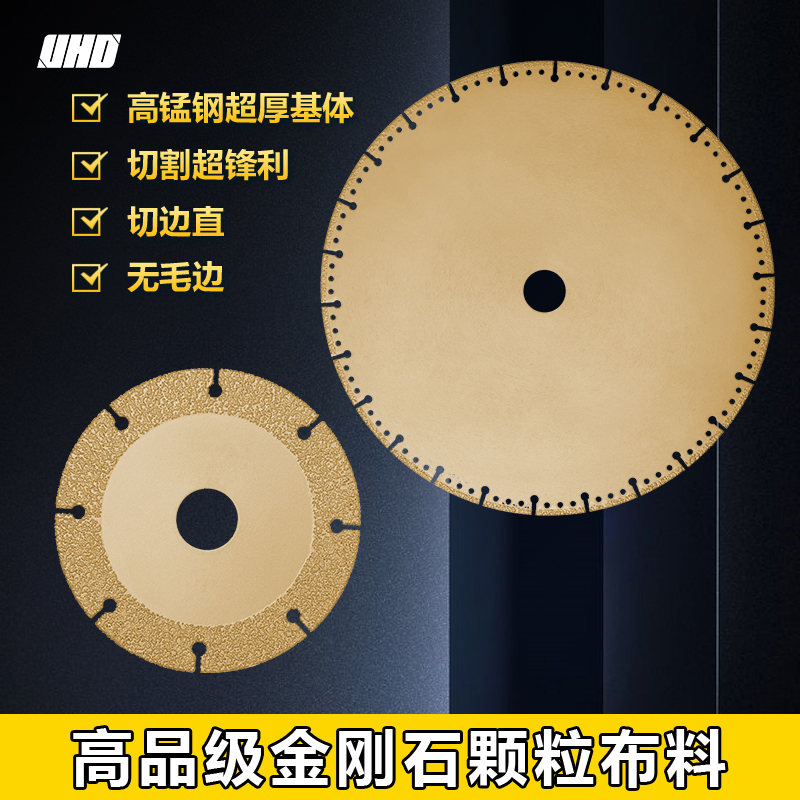
- High Abrasion Resistance: Adopting high-grade diamond grains as abrasive materials, the saw blade maintains stable cutting sharpness even after long continuous operation, avoiding frequent blunt issues that interrupt your production rhythm.
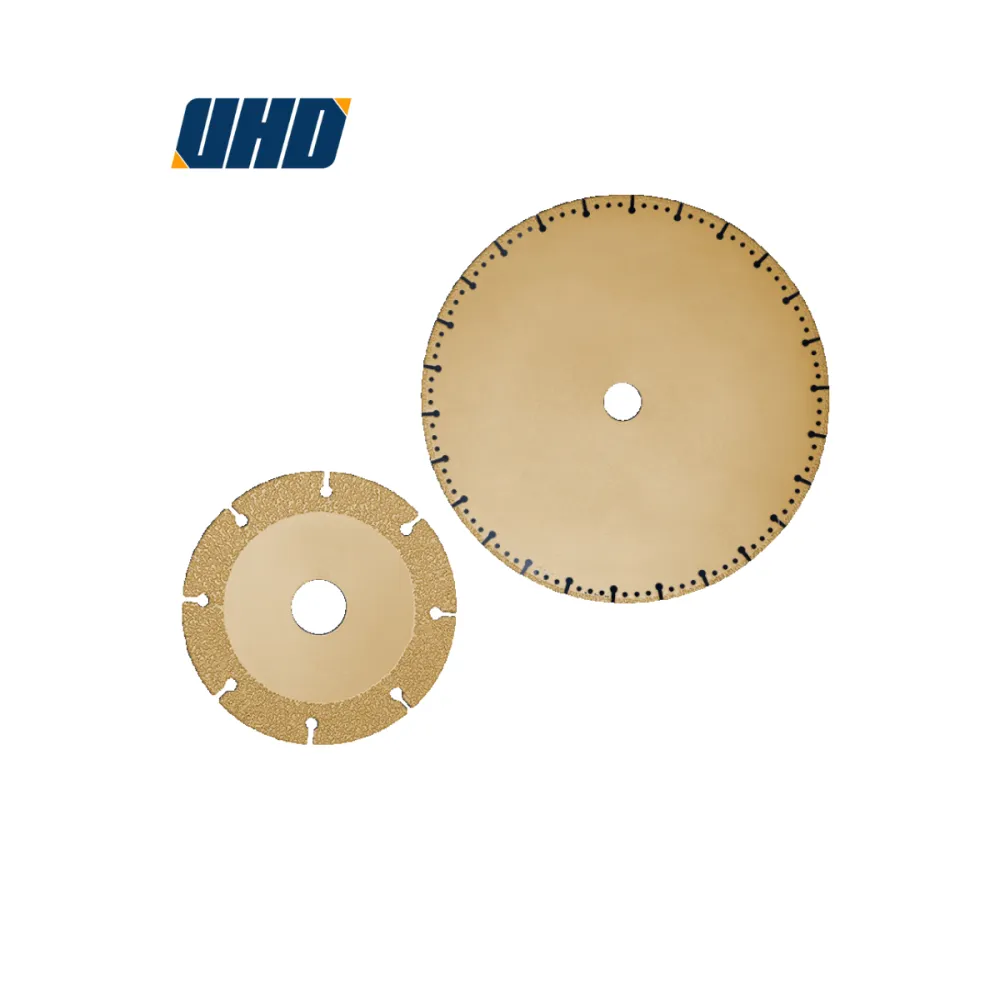
- Long Service Life: With professional vacuum brazing process that firmly bonds diamond grains to the substrate, the overall service life is far longer than conventional resin cutting blades, effectively reducing tool replacement frequency.
- Cutting Stability: The extra-thick high manganese steel substrate design effectively reduces vibration during high-load cutting, making the whole operation process smoother and safer.
- Low Dust Generation: Optimized cutting structure generates much less dust compared with traditional cutting tools, which improves workplace hygiene and reduces the environmental burden on your production site.
Material and Working Condition Adaptation Reference
A suitable brazed diamond saw blade must be able to match the specific hardness, toughness and cutting difficulty of your processed workpiece, to achieve the best balance between cutting efficiency and tool consumption:
| Typical Cutting Materials |
Key Performance Requirements |
Expected Cutting Effect |
| Grey Cast Iron / Ductile Iron |
High impact resistance, good heat dissipation |
No edge chipping, smooth cutting section |
| Stainless Steel / Cemented Carbide |
Strong sharpness, low cutting resistance |
Labor-saving operation, no thermal deformation of workpiece |
| Granite / Stone |
Ultra-high abrasion resistance, stable tooth shape |
Straight cutting path, uniform section |
| Glass / Ceramic |
High cutting precision, small vibration |
No crack, no subsequent polishing needed |
Brazed Diamond Saw Blade vs Traditional Resin Saw Blade: Practical Comparison
Many industrial purchasers initially notice the difference in unit price, but often ignore the huge gap in total operating cost after long-term use. The following practical comparison can help you make a more comprehensive judgment:
UHD Brazed Diamond Saw Blade
- Extremely long service life, one diamond saw blade can replace multiple resin saw blades
- Sharp and stable cutting, no burr on the cutting edge
- Low dust emission, which meets higher workplace environmental requirements
- Extra-thick high manganese steel substrate, higher safety during use
- Low comprehensive labor cost and tool replacement cost
Traditional Resin Cutting Blade
- Short service life, frequent replacement required
- Easy to wear and blunt, unstable cutting effect after working for a period of time
- Large amount of dust and debris generated during cutting
- Common thin substrate, relatively high risk of fracture under heavy load
- High total consumption cost under long-term continuous working conditions
Full-lifecycle Total Cost Assessment Suggestion
When selecting a brazed diamond saw blade, UHD Ultrahard Tools recommends that you do not only evaluate the unit price, but calculate the comprehensive use cost in combination with your actual production scenario:
Calculation reference indicators you can refer to include: effective cutting meters per saw blade, average time spent on tool replacement, labor intensity of operators, post-processing workload of cutting section, dust cleaning and site maintenance cost. In most industrial continuous cutting scenarios, high-quality brazed diamond saw blades often show more obvious cost advantages than low-cost traditional cutting tools after being put into use for a period of time.
As a high-tech enterprise specializing in R&D, production and sales of ultrahard material tools, UHD designs and produces brazed diamond saw blades strictly according to the requirements of industrial cutting scenarios, helping global industrial customers obtain stable, efficient and low-consumption cutting solutions. Whether you are in metal processing, stone processing or other industrial fields, you can match the most suitable saw blade specifications according to your actual processing materials and working conditions.


.png?x-oss-process=image/resize,h_1000,m_lfit/format,webp)


